
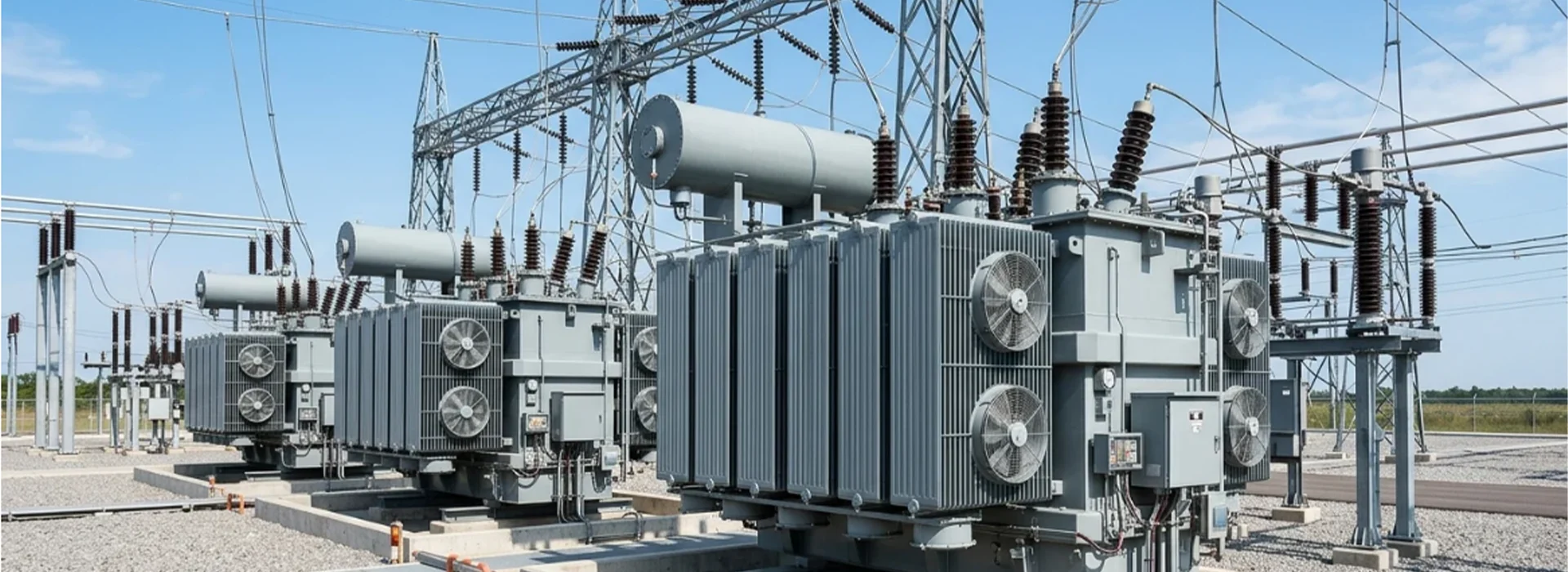
Applications · Power Transformers
CRGO Steel for Power TransformersLow no-load-loss cores for GSU, substation & network units
Grain-oriented silicon steel for power transformer cores, 0.23–0.30 mm, in standard M4–M6 and Hi-B laser-scribed grades down to 0.85 W/kg core loss. Supplied as coil, cut sheet or slit strip to your core-leg width, with a mill test certificate on every order — for generator step-up, substation and large network transformers.
Product photos
CRGO built for your transformer core
From mill coil to a stacked, mitred-joint core — the material and processing that goes into a power transformer.
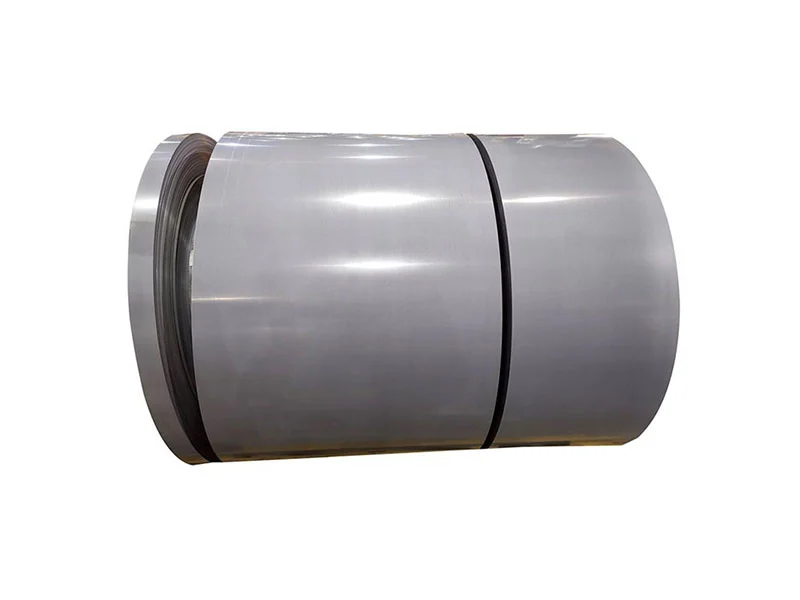 Master coil · M4–M6
CRGO Master Coil
Standard grain-oriented coil straight off the mill, ready for slitting to your core-leg width.
- Thickness0.27–0.30 mm
- Core loss P1.7/50≤ 1.10 W/kg
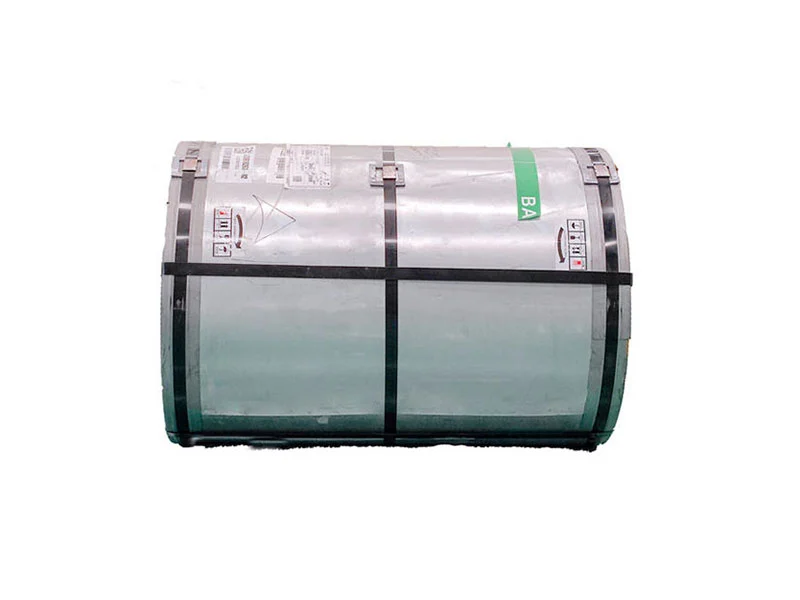 Hi-B laser-scribed · 0.23 mm
Hi-B Laser-Scribed Sheet
Domain-refined 23ZH90 sheet — the fine scribe lines that cut hysteresis loss are visible under raking light.
- Thickness0.23 mm
- Core loss P1.7/50≤ 0.85 W/kg
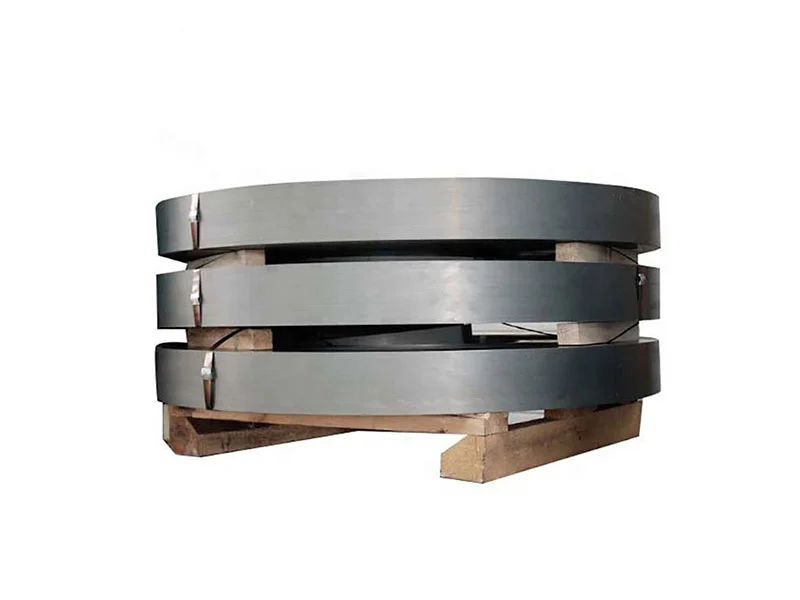 Slit strip · stacked core
Precision Slit Strip
Cut to your core-leg width with tight burr and camber tolerance, shown here stacked into a mitred-joint core.
- Width toleranceTight, to drawing
- Joint style45° mitred
Why CRGO
No-load loss runs for 30+ years — the core steel decides it
A power transformer’s flux runs along one fixed axis for its entire service life, which is exactly what grain-oriented steel is rolled for: aligning the grain to that axis cuts hysteresis and eddy-current loss far below what a random-grain (non-oriented) material can achieve. Unlike load loss, which varies with demand, no-load loss is present continuously — every hour the unit is energised — so a small reduction in core-loss density compounds into a large lifetime saving on a generator step-up or substation unit that stays in service for decades.
Utilities and large EPC buyers typically don’t award power-transformer bids on steel price alone — they evaluate no-load loss (NLL) and load loss (LL) using capitalisation factors (commonly written as A + B × NLL + C × LL) set in the tender, then compare total evaluated cost across bidders. That’s why Hi-B laser-scribed steel, despite its higher per-ton price, is the standard choice on large units: the incremental steel cost is repaid many times over through the capitalised loss saving.
Types we supply for
Across the power transformer family
Grade and thickness shift with unit size and duty — tell us which you’re building and we’ll recommend a spec.
01
Generator step-up (GSU)
Largest units, highest MVA — Hi-B laser-scribed 0.23 mm is standard for the lowest lifetime loss.
02
Substation / network
Grid substation transformers, typically 0.27–0.30 mm standard or Hi-B depending on the utility’s loss evaluation.
03
Auto-transformers
High-voltage interconnection units — same core-steel selection logic as conventional power transformers.
04
Furnace & rectifier
Heavy-duty industrial units with high harmonic content — we can advise on grade for your loss profile.
Application photos
Where this steel ends up
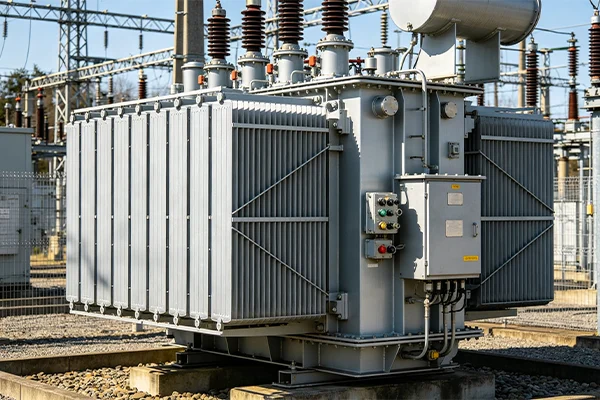
Power transformers built with our CRGO cores, from the manufacturing floor to the substation yard.
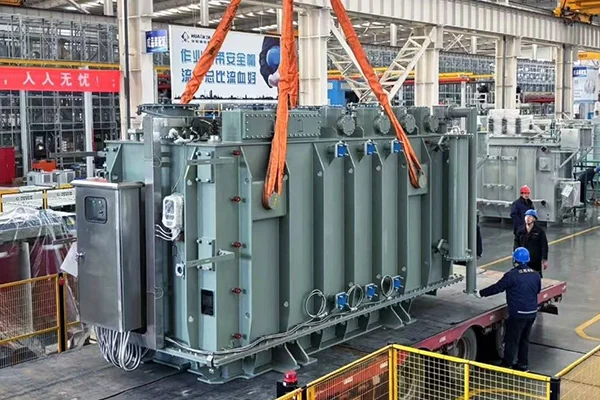 Substation-scale, oil-filled
Power Transformer Unit
A finished unit in service — the end use for every coil and sheet we ship for this application, tested to hold its rated loss and impedance over decades.
 Core & winding assembly
Core & Winding Assembly
Laminations stacked leg by leg on the factory floor, then wound — dimensional accuracy in our slit strip keeps this stage fast and consistent.
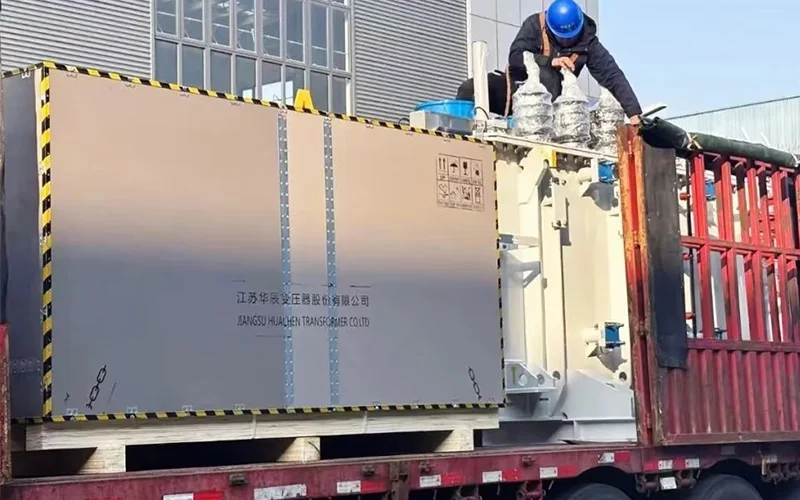 Tested & tanked
Tested & Tanked
Routine tests confirm no-load and load loss against the design figure before the unit ships — the payoff of a consistent core-loss spec upstream.
Side by side
Standard CRGO vs Hi-B for power transformer cores
Both are grain-oriented — Hi-B costs more per ton but lowers the no-load loss that runs for the transformer’s whole life.
| Property | Standard CRGO (M4–M6) | Hi-B laser-scribed (23ZH90) |
|---|---|---|
| Thickness | 0.27–0.30 mm | 0.23 mm |
| Core loss P1.7/50 | ≤ 1.10–1.30 W/kg | ≤ 0.85 W/kg |
| Magnetic induction B8 | ≥ 1.85 T | ≥ 1.90 T |
| Typical unit size | Distribution to mid-size power | Large power & GSU transformers |
| Best for | Balanced cost when loss evaluation is modest | High capitalised-loss tenders, long duty cycles |
Working from an EN or JIS spec? See the grade equivalents chart → or browse the full CRGO range →
Recommended grades
Grades we ship for power transformer cores
Standard M4–M6 for most distribution and mid-size power cores; Hi-B and laser-scribed grades for the largest units where lifetime no-load loss cost outweighs the steel price.
Equivalents, at a glance
How we work
From core spec to your dock
A simple path from spec to delivery, built for transformer manufacturers.
Send core spec
Grade, thickness, core-leg width, or a core drawing.
Quote in 24h
Standard or Hi-B pricing and availability within one business day.
Free samples
Test no-load loss and stampability, usually within a week.
Slit & test
Cut to core-leg width, tested to grade with a mill certificate.
Export delivery
Moisture-proof coil packing and ocean freight to your port.
FAQ
Sourcing CRGO for power transformers
Which CRGO grade is best for power transformers?
Standard M4–M6 (27Q120–30Q140) covers most distribution and mid-size power cores. For large power transformers and GSU units where no-load loss runs continuously for decades, Hi-B laser-scribed grades like 23ZH90 lower core loss further and usually pay back the higher steel cost over the transformer’s service life.
What’s the real difference between standard and Hi-B CRGO?
Hi-B steel has stronger grain alignment and, when laser-scribed, refined magnetic domains — both cut hysteresis loss. That lowers core loss P1.7/50 from around 1.10–1.30 W/kg down to 0.85 W/kg or below, at a thinner 0.23 mm gauge.
How do buyers actually evaluate core-loss cost when comparing suppliers?
Utilities and EPCs commonly use a loss-capitalisation formula set in the tender — a fixed cost per kW of no-load loss and per kW of load loss, added to the purchase price to get a total evaluated cost. A lower-loss Hi-B core can win on evaluated cost even at a higher purchase price; tell us your capitalisation rates and we can help size the trade-off.
Do you supply wound or stacked cores, or only flat steel?
We supply coil, sheet and precision-slit strip to your core-leg width and mitred-joint drawing. We don’t assemble finished wound cores ourselves — that stays with your winding line — but we cut to the dimensions you build with.
Is Hi-B laser-scribed steel required for generator step-up (GSU) transformers?
Not strictly required, but it’s the common choice: GSU units run at high, continuous loading for their whole service life, so the loss saving from Hi-B laser-scribed steel is usually the largest of any power-transformer duty type.
What thickness do power transformer cores typically use?
Most power transformer cores run 0.27–0.30 mm in standard CRGO; large or high-efficiency units often step down to 0.23 mm Hi-B for the lower loss it enables.
Can you slit to my exact core-leg width?
Yes — precision slitting to width with tight burr and camber tolerance, sized to your core-leg dimension or lamination drawing.
What’s the minimum order quantity for power transformer grades?
MOQ depends on grade, thickness and width. Tell us your target volume and we’ll confirm what’s workable — trial quantities are possible for new projects.
How fast can you quote and ship for a large power-core order?
Quotes come within 24 hours. Common M4–M6 grades often ship from stock in days; Hi-B and made-to-order runs typically take a few weeks.
Do you provide mill test certificates?
Yes — a mill test certificate covering core loss and induction values ships with every order, under ISO 9001 and IATF 16949.
Why buyers choose Zhongxin
Mill-grade material, export-ready service
Wuxi Zhongxin Special Steel Co., Ltd. is a Chinese manufacturer and exporter of grain-oriented, non-oriented and ultra-thin silicon steel, serving transformer and motor makers across Europe, the Americas, Asia and beyond.
Send your core spec — get a quote in 24 hours
Share grade, thickness and core-leg width, or upload a drawing. Free samples available.